Geospatial Power
Geospatial Power! Dementia Singapore
23 December 2025
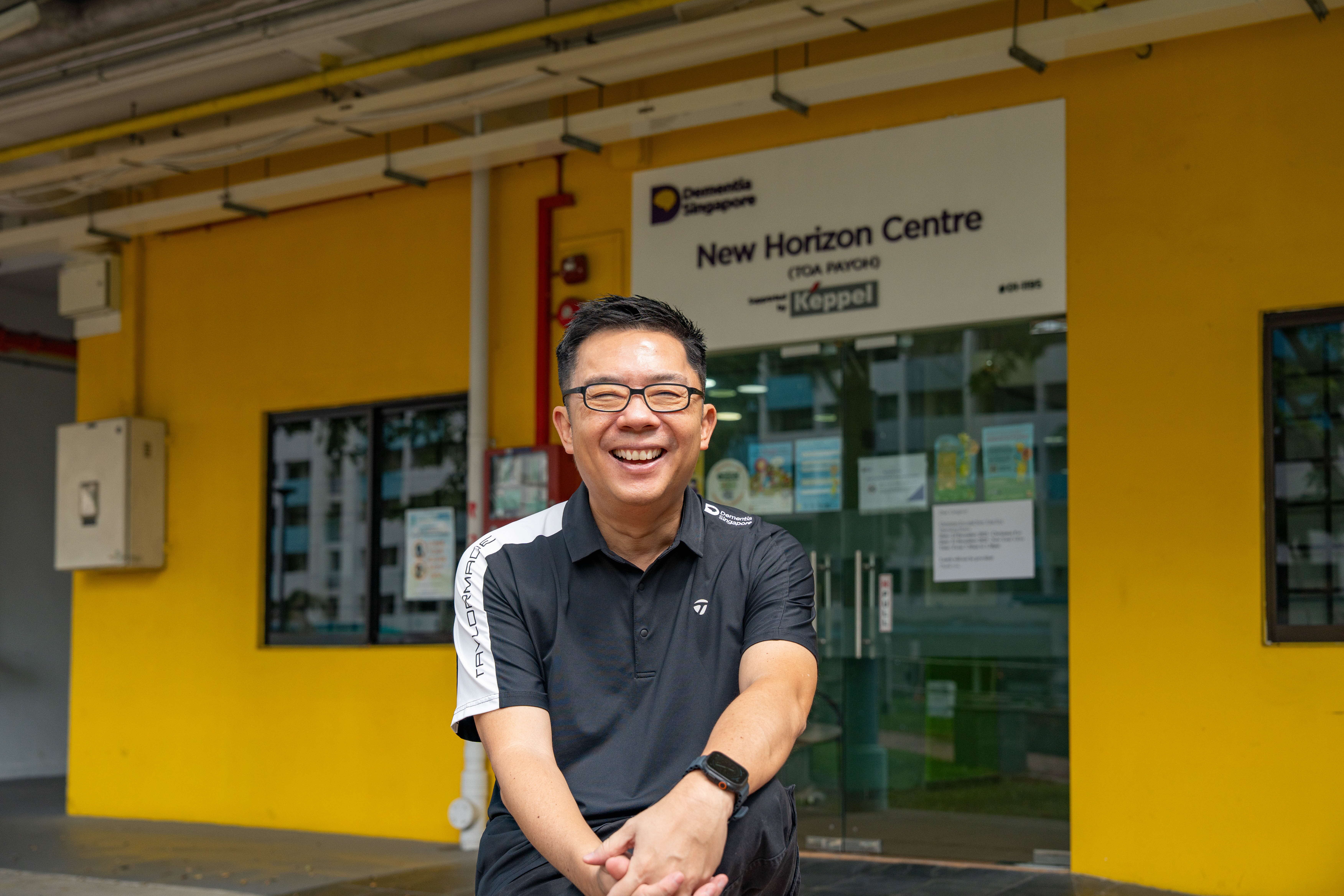
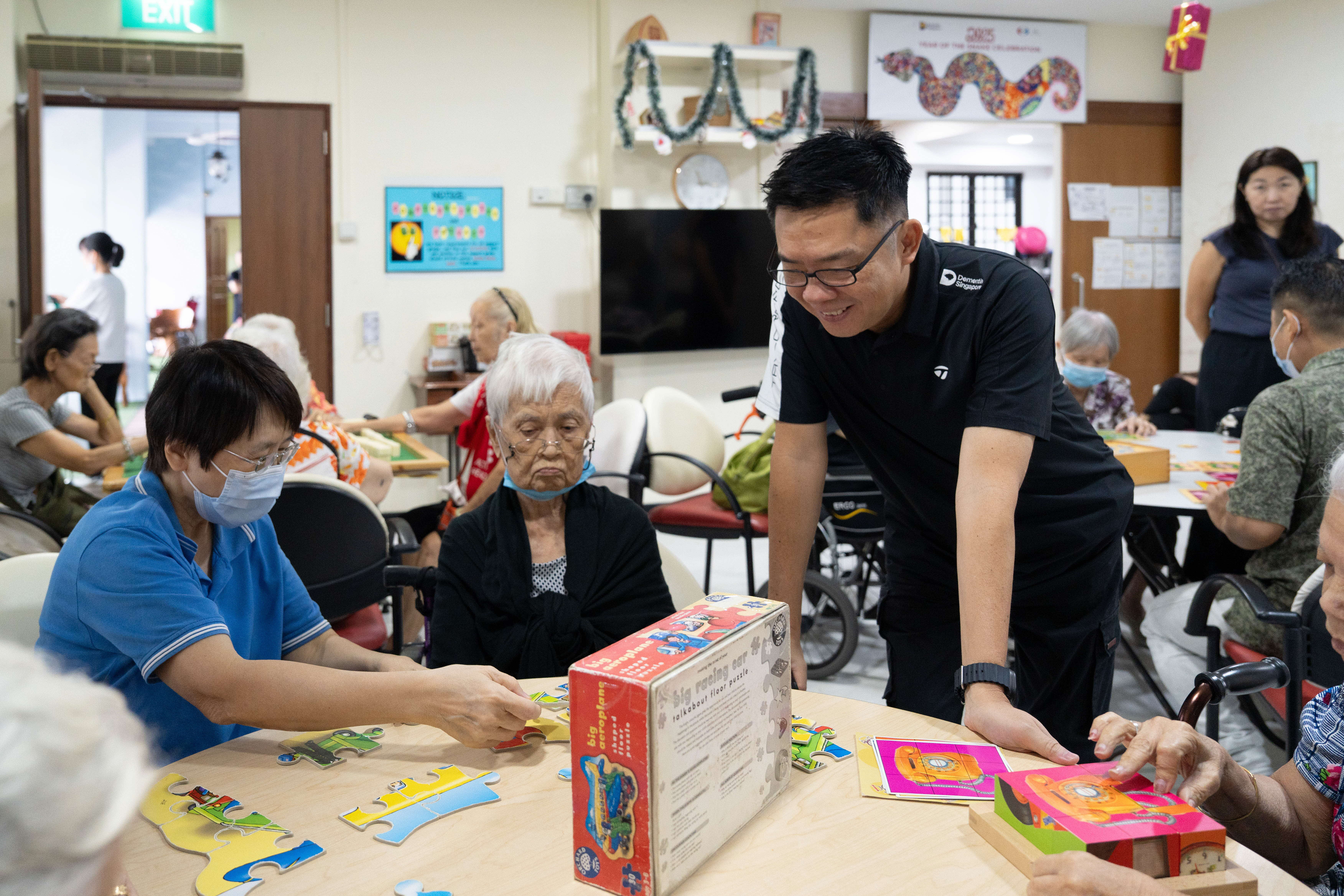
On a weekday morning, music plays in the background at the New Horizon Centre in Toa Payoh. A jigsaw puzzle is taking shape on one table, while a caregiver chats with a volunteer nearby. The centre is one of six day care facilities run by Dementia Singapore, where daily routines and familiar activities help persons living with dementia stay engaged and oriented.
For this instalment of our #GeospatialPower series, we spent time at the centre with Bernard Lim, Director of Advocacy and Communications at Dementia Singapore — and, for those who grew up with the radio in the 1990s, a former Perfect 10 DJ. What followed was an honest conversation about dementia as something most of us will eventually need to understand, the role of SLA's OneMap in locating missing persons with dementia, and what it takes to build a more dementia-inclusive Singapore.
Dementia Singapore has supported persons living with dementia and their caregivers since 1990. The CARA app is one of your key initiatives — what gap was it created to fill?
When CARA was first conceived, the biggest gap was the lack of a connected dementia care ecosystem. Families caring for someone with dementia were navigating complex care systems — different helplines, different cards, different bits of information. And when their loved ones went missing, the stress was overwhelming.
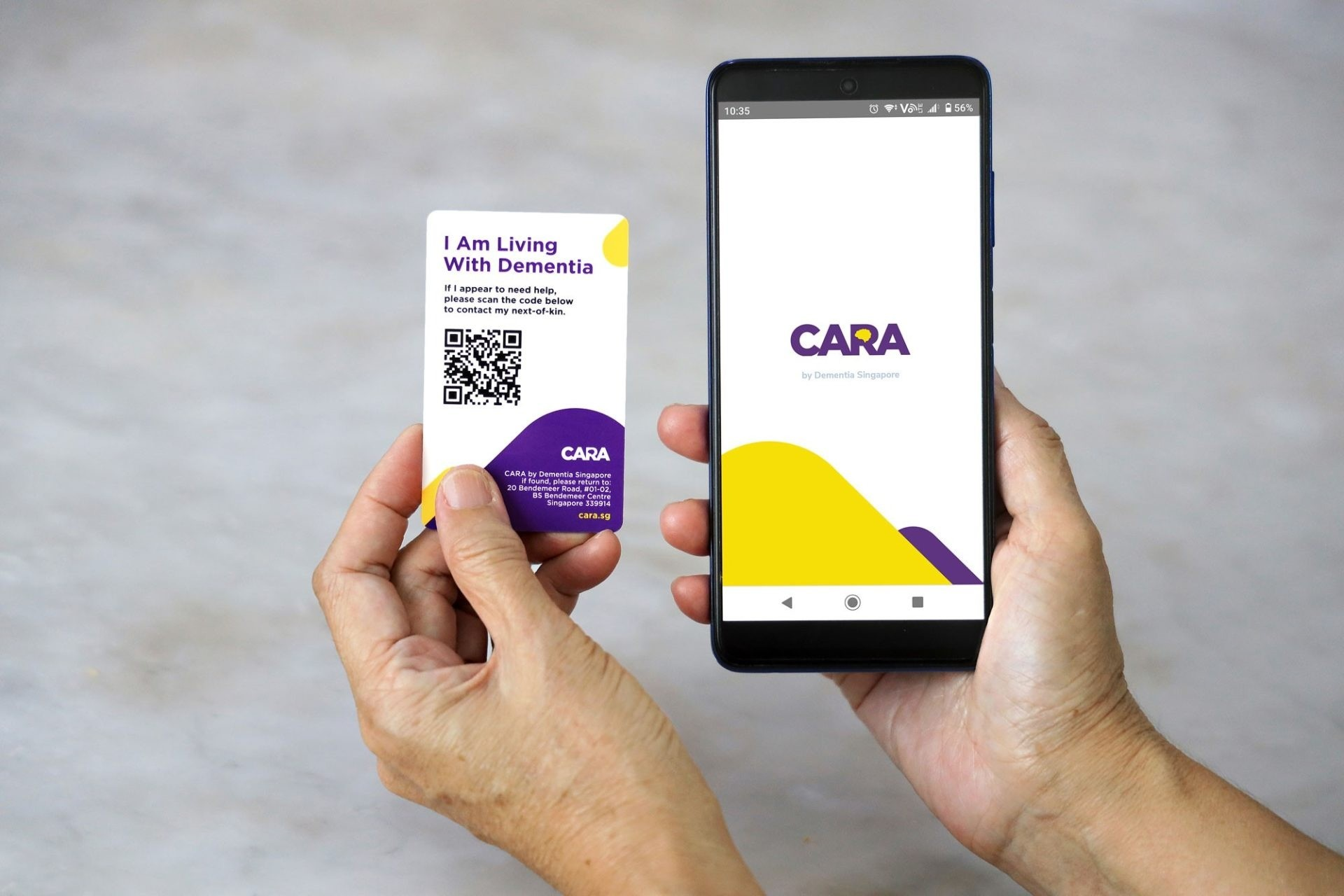
CARA was created to reduce that anxiety — and location plays a critical role. It started as an evolution of the Safe Return Card, but we wanted to go further. The idea was to create a shared platform where caregivers are supported, and where the wider community knows how to assist appropriately. With CARA, app users can be alerted quickly— easing the pressure on the caregiver and allowing persons living with dementia (PLWD) to continue being out in the community with greater confidence.
This assurance matters even more today. By 2030, over 152,000 people in Singapore are projected to live with dementia, up from about 100,000 now. One in four Singaporeans will be over 65. Families are smaller, caregivers are stretched, and many adults find themselves caring for both their children and ageing parents at the same time.
Dementia is never just one person’s problem. It affects the whole family and community.
CARA replaced the physical Safe Return Card with a digital, geospatial‑enabled ecosystem. What drove that shift?
CARA stands for Community, Assurance, Rewards, and Acceptance — that's what we want this app to be.
But at its heart, CARA exists for one main reason: to help families find their missing loved ones as quickly as possible. Anyone who's been through that experience knows how distressing it is.
The physical Safe Return card served a purpose, but it had limits. It could only identify one caregiver and didn't allow for real-time coordination. When someone goes missing, every minute feels heavy. Moving to a digital platform allowed us to do much more whilst keeping the original mission intact.
Caregivers can now receive real-time alerts when a CARA card is scanned, and there is stronger privacy and accountability as the caregivers’ contact details are only revealed after the member of public input their own contact details. Most importantly, a digital ecosystem allows us to integrate new features and improve existing functions, as the needs of the caregivers and persons with dementia are constantly evolving.
CARA uses OneMap to power its location‑based features. Why was OneMap the natural choice?
Picture this: you're at a hawker centre and notice an elderly person who seems confused, maybe asking the same question repeatedly. You want to help, but where do you bring them?
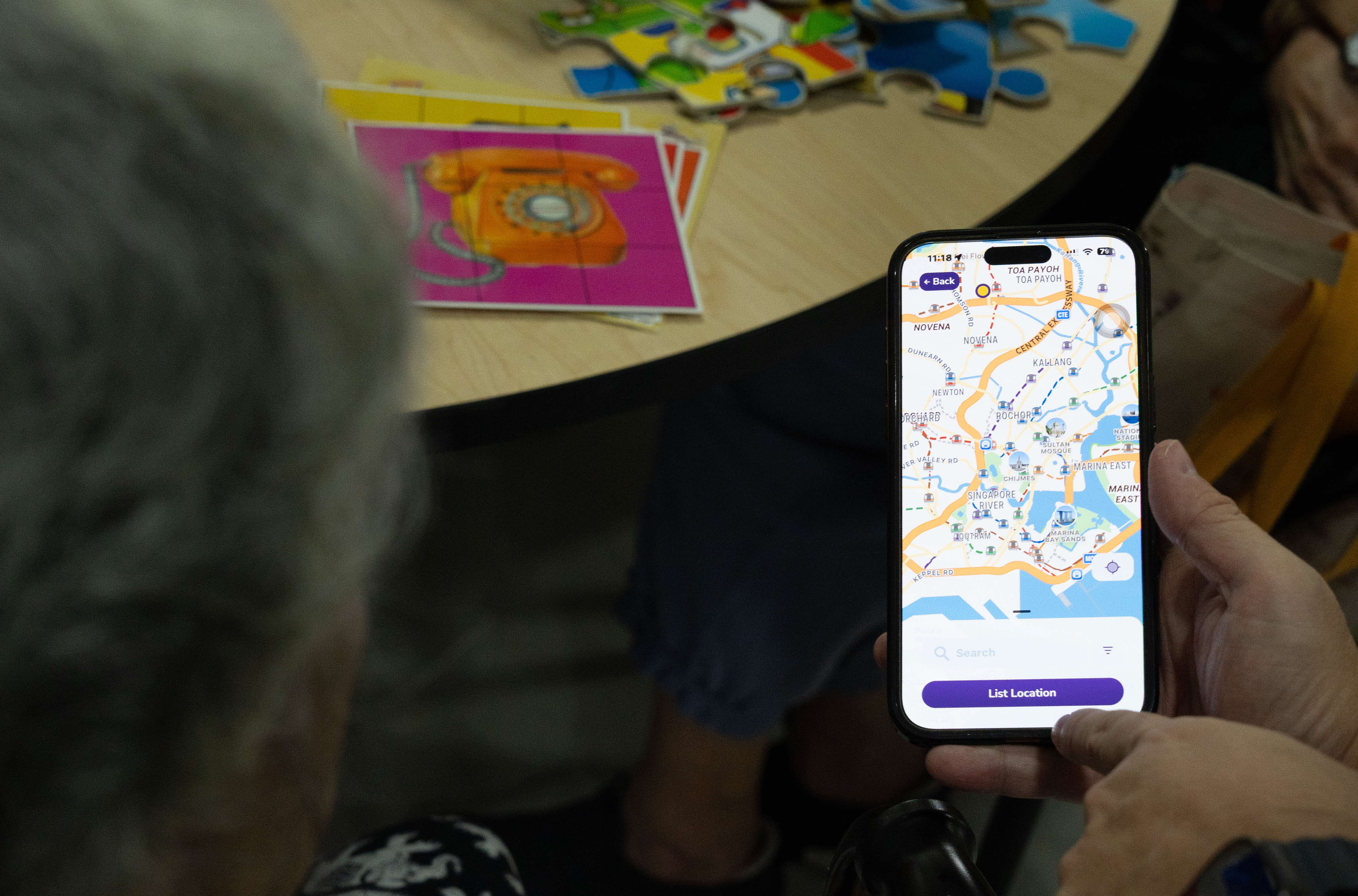
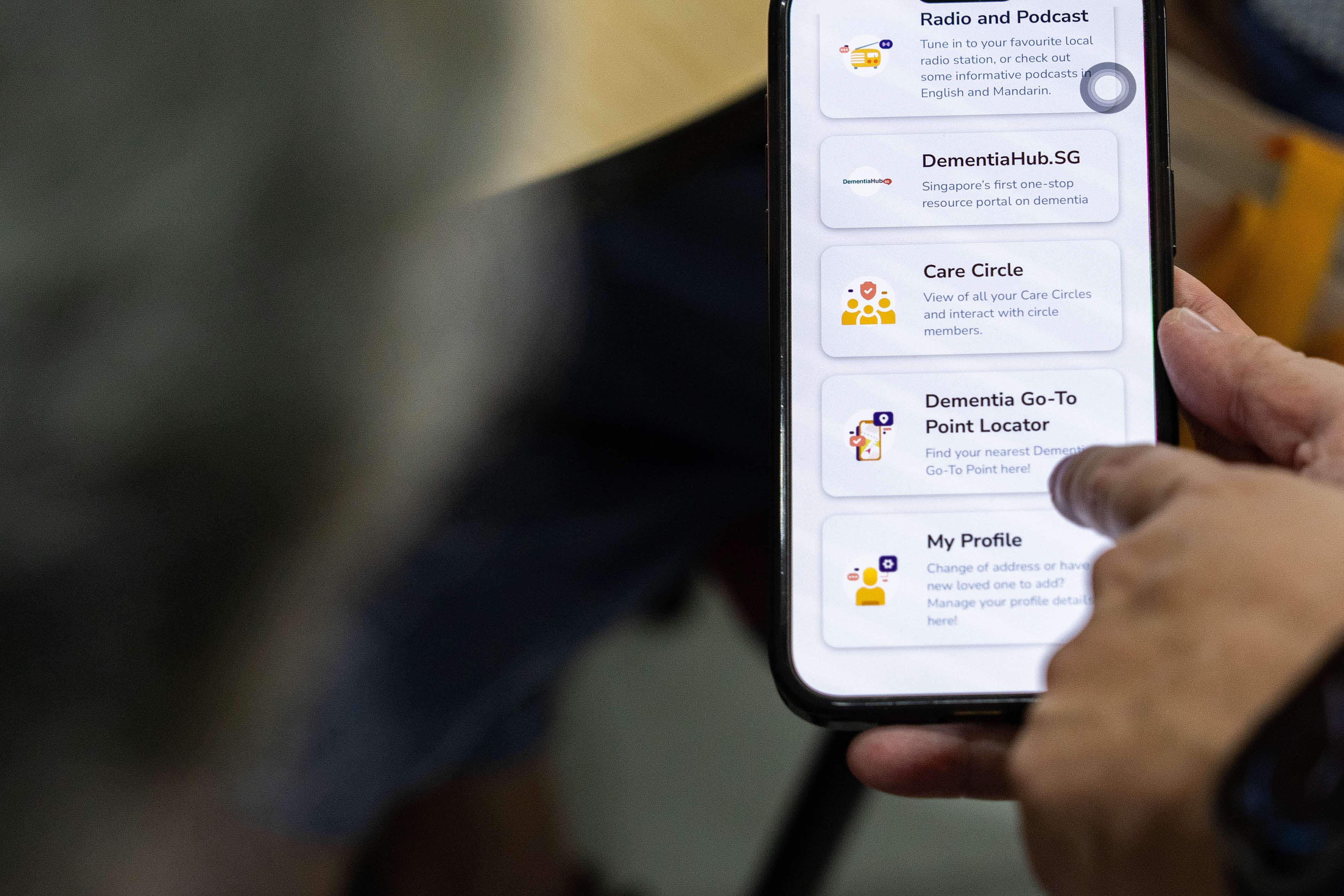
That's where SLA’s OneMap comes in. It powers CARA's Dementia Go-To Point (GTP) Locator — showing you the nearest safe return point, such as an MRT station or a supermarket, where trained staff can step in to assist and where possible, help reunite the person with their family or caregiver.
Singapore’s landscape is always evolving – new BTOs are built, roads are diverted, and more. As Singapore’s national authoritative map, OneMap is regularly updated with local Singapore-centric data, including the latest Dementia GTPs approved by the Agency for Integrated Care (AIC). Using OneMap gives us confidence that the locations shown in CARA are accurate and consistent with what other public agencies are using.
When someone is lost and distressed, the last thing you need is outdated information leading you the wrong way. We needed a map we could trust — one that's as current as the city itself.
How important do you think geospatial will be for an ageing population with increasing number of PLWDs?
Incredibly important. Every minute counts when someone goes missing. The faster they're found, the less stressful it is for them and their families.
Most of us have never been trained for these moments. You see someone who looks lost, and your mind races: Should I approach them? What if I make it worse? Where can I bring them to ensure they are safe?
The Dementia GTP Locator cuts through that conundrum. It tells you: here's the nearest safe place. Every MRT station is a Dementia Go-To Point, with staff trained to help. With a few taps, you know exactly where to go.
When a caregiver reports a missing person through CARA, alerts are sent out to the CARA community immediately. In addition, through our ongoing partnership with the LifeSG app, these alerts are also broadcast to LifeSG users living near the last known location of the missing person.
Good maps don't just show locations. A reliable map interface and data give people confidence to act and that’s how we build shared responsibility.
Some might ask: Can persons living with dementia really use a digital app?
It’s a fair question. CARA isn’t designed for PLWDs to navigate on their own. It’s built for caregivers, family members, and the wider community — the people most likely to step in when help is needed.
Because here's the thing: caregivers are often at home. It's everyday Singaporeans who encounter these situations when they are out and about. That's why we need more eyes and people who know what to do.
Today, over 6,300 members of the public (out of 13,400 total users) have joined CARA, alongside caregivers and PLWDs. To encourage more people to sign up, we've partnered with organisations to offer perks like digital newspaper subscriptions and lifestyle benefits.
But beyond the incentives, the app serves as a resource portal for all things dementia. Users can learn how to recognise the various symptoms of dementia, how to communicate with a person with dementia, where to find help, and more. These resources ultimately undergird our advocacy efforts to raise awareness of dementia in Singapore.
Supporting PLWDs also means supporting those who care for them. This includes encouraging greater understanding and flexibility in workplaces, where employees may be balancing work with caregiving responsibilities. Building a dementia-inclusive society requires empathy — from communities, employers, and all of us.
How do we get more elderly to use the app?
One key update is language accessibility. The app is now available in Mandarin, and will also be available in Malay by January 2026. With this, we are reaching out to the Malay community through engagement sessions at mosques. Tamil translation is planned for a later phase.
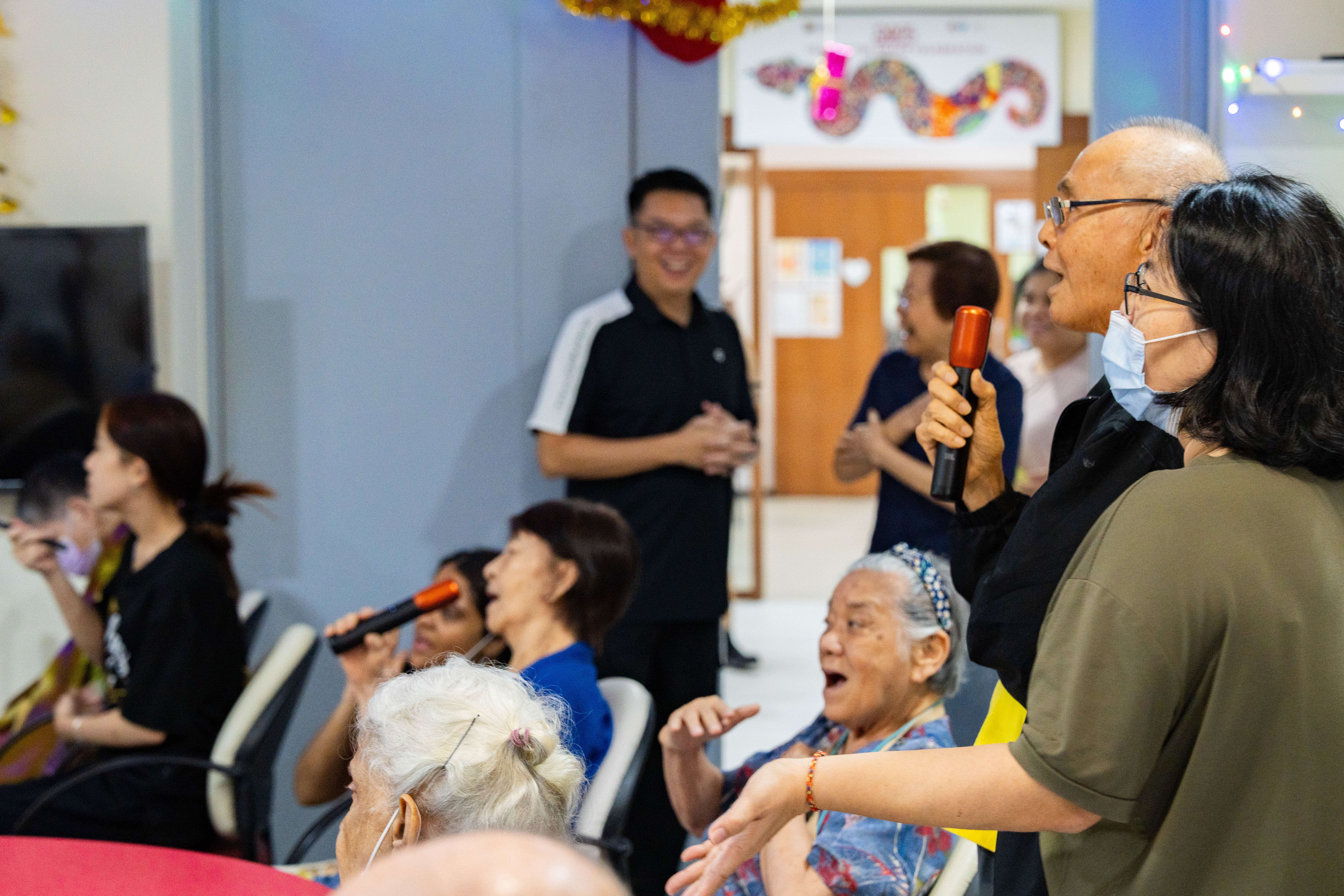
We also conduct regular outreach, such as getai roadshows in mature estates like Ang Mo Kio, where hosts share vital information about dementia in various dialects.
Looking ahead, how do you see geospatial tools shaping the future of dementia care in Singapore?
I believe geospatial tools will become a powerful layer of everyday support — guiding people to safe spaces, connecting them to help nearby, and giving the public the confidence to act.
For us, CARA is more than an app. It’s a community tool. And the more people who carry it, the stronger that community becomes.
There's real potential here. Imagine maps showing dementia-friendly cafés or clinics, or hyper-local alerts that help volunteers and transport operators respond faster when someone needs help.
As Singapore ages, these tools can help us become more compassionate and responsive. Increasingly, knowing exactly where help is, can make all the difference.
SLA’s #GeospatialPower series highlights individuals and companies utilising SLA’s #geospatial data, technology, and infrastructure to create innovative solutions for a smarter, safer, and more sustainable Singapore