#SLAExplains: The Unseen Work Behind Temporary State Land Use
12 June 2026
Of Temporary Uses, Tenancies and Tough Trade-Offs
From community events and show flats to hospitals, construction staging grounds, arts spaces, dog runs and even wakes — temporary uses of State land are more embedded in daily life than most people realise. Yet the work that makes these uses possible is almost entirely invisible.
SLA's Tenancy, Licence & Land Management (TLLM) division is a team of more than 50 officers that handles the use of State land spanning temporary short-term land use, land management and tenancy matters.
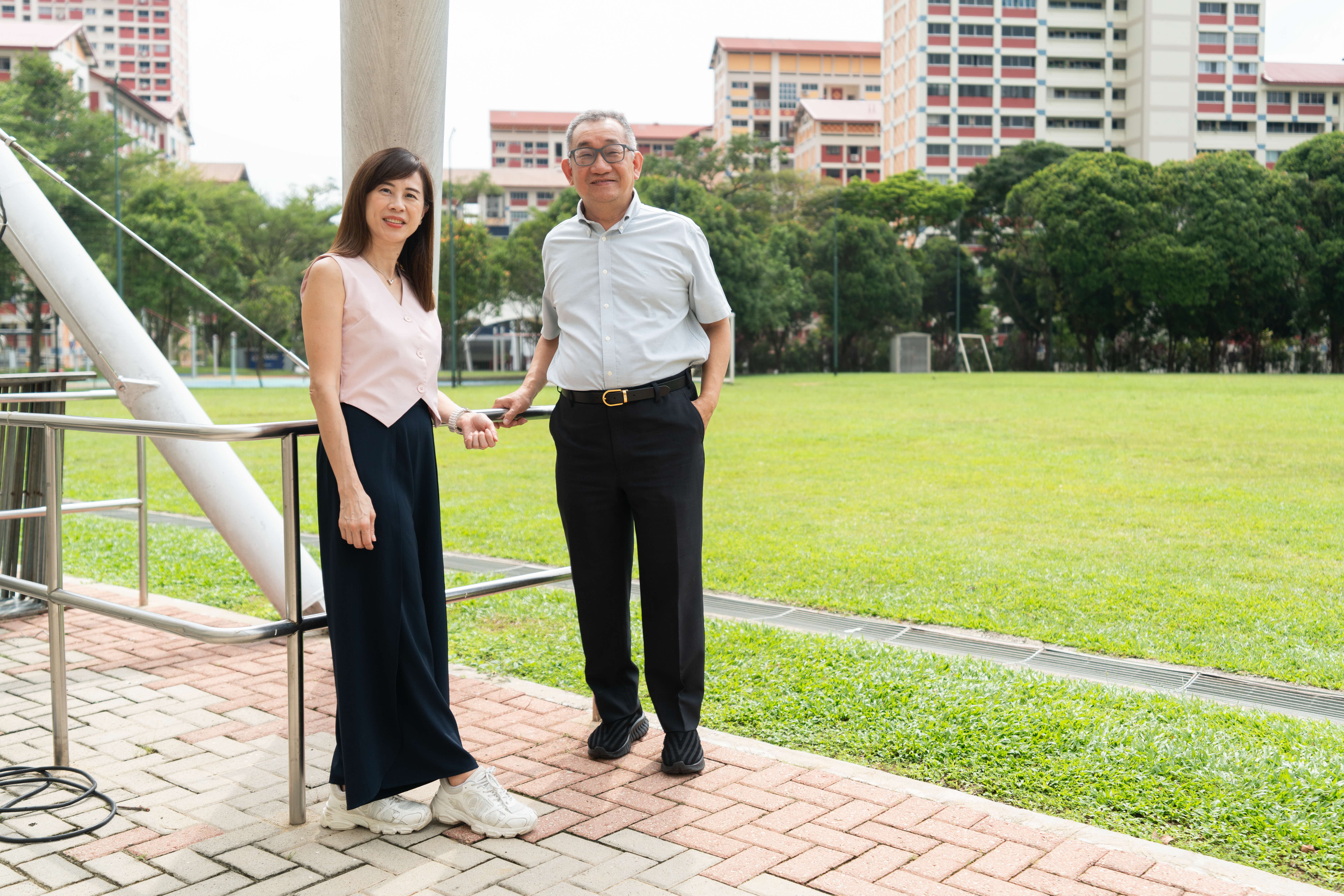
In this instalment of #SLAExplains, TLLM Directors Ng Teng Hwee and Andrew Tan pull back the curtain on what really goes on behind-the-scenes — from balancing competing land needs and managing public feedback, to why a seemingly "empty" plot is often far more complicated than it looks.
1. For a start — how was TLLM formed?
Teng Hwee: A useful way to think about TLLM is that we manage the full lifecycle of State land use — from application and assessment, to approval, monitoring, renewal, termination, reinstatement and maintenance.
The uses are very varied: construction-related uses such as site offices, workers' quarters and storage areas; community and social uses like trade fairs and religious functions; infrastructure uses like covered linkways and footpaths; and commercial uses like show flats, outdoor refreshment areas and performances.
TLLM brings these related functions together across two key areas. Tenancy and Licence Management which covers tenancies, Temporary Occupation Licences (TOLs) and Non-Renewable TOLs (NRTOLs), and Land Management which covers the ground management of State land.
So the work is not just about issuing licences – the name in itself appears one dimension. It is about the many facets of making sure State land is used safely, fairly and in line with its intended purpose — whether the use lasts a few days, a few months or a few years.
Andrew: A part of TLLM work today came from SLA taking over the management of all State land within HDB estates from HDB with effect from 1 March 2023.
The transfer consolidated these land management functions under SLA for greater administrative and operational efficiency. This means SLA now handles the maintenance, feedback and issuance of TOLs of about 1,100 hectares of State land within HDB estates, including uses such as community events, as well as communal facilities like multi-purpose courts.
My team focuses on these sites that sit very close to where people live. So if there are complaints about illegal parking, burning, noise from an event or poor reinstatement of a site, those come to us. So the work is not only about whether an application can be approved, but also about how the use affects the surrounding community.
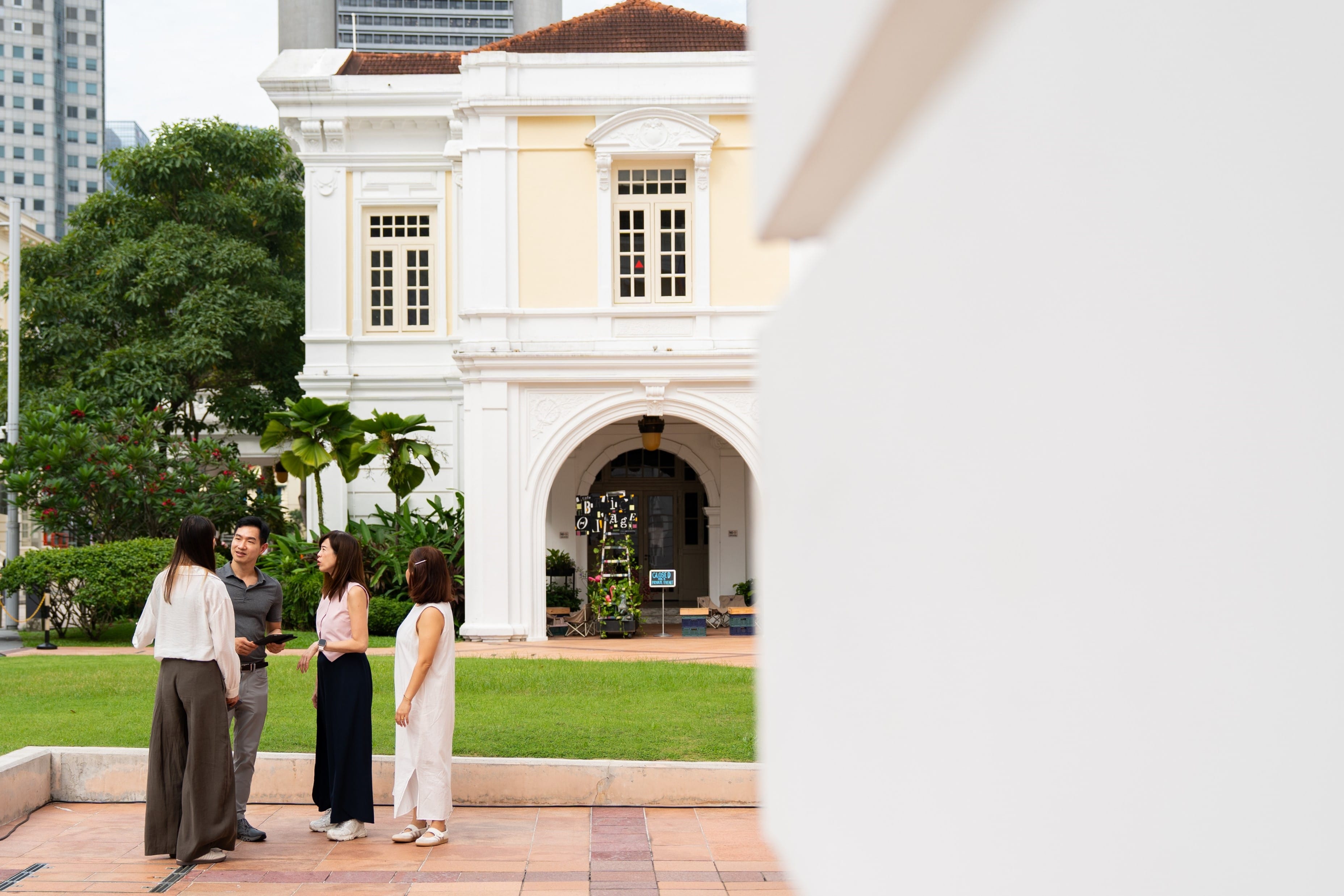
Teng Hwee and her team manage State land and buildings supporting a variety of public functions — including arts and cultural uses such as The Arts House (above) and Victoria Theatre
Teng Hwee: My other team handles the full overview of TLLM, i.e. besides TOL, we manage tenancy matters involving State properties used by statutory boards and public healthcare groups — spaces that support public functions. Hospitals, polyclinics, community facilities, educational institutions and arts housing all fall under this. Arts use is one area people may not immediately associate with land management, but these spaces are vital to Singapore's cultural ecosystem. TLLM manages close to 2,500 tenancy agreement and TOL accounts, and the issuance of approximately 1800 NRTOLs per annum.
So while people may associate SLA mainly with management of State properties or mapping, there is a very operational, people-facing side to our work that is often under the radar.
As long as it involves State land and some form of tenancy or temporary use, there is a good chance TLLM is involved in the process.
2. Many people hear the term “Temporary Occupation Licence” or TOL but may not fully understand what it means. What exactly is a TOL — and is it different from a tenancy agreement?
Teng Hwee: "Temporary" can be misleading. People hear the word and assume it means a few days or weeks, but some TOLs support uses that last for years — particularly supporting uses which are tied to large-scale national projects.
The key distinction is not really duration, but the nature of the use.
TOLs are generally for bare State land supporting a temporary or transitional activity: construction staging areas and storage, site offices, show flats, event spaces. These uses are tied to another main activity — once that activity ends, the use should cease too. A show flat, for instance, exists only as long as the development is being marketed. Once the units are sold, it should go.
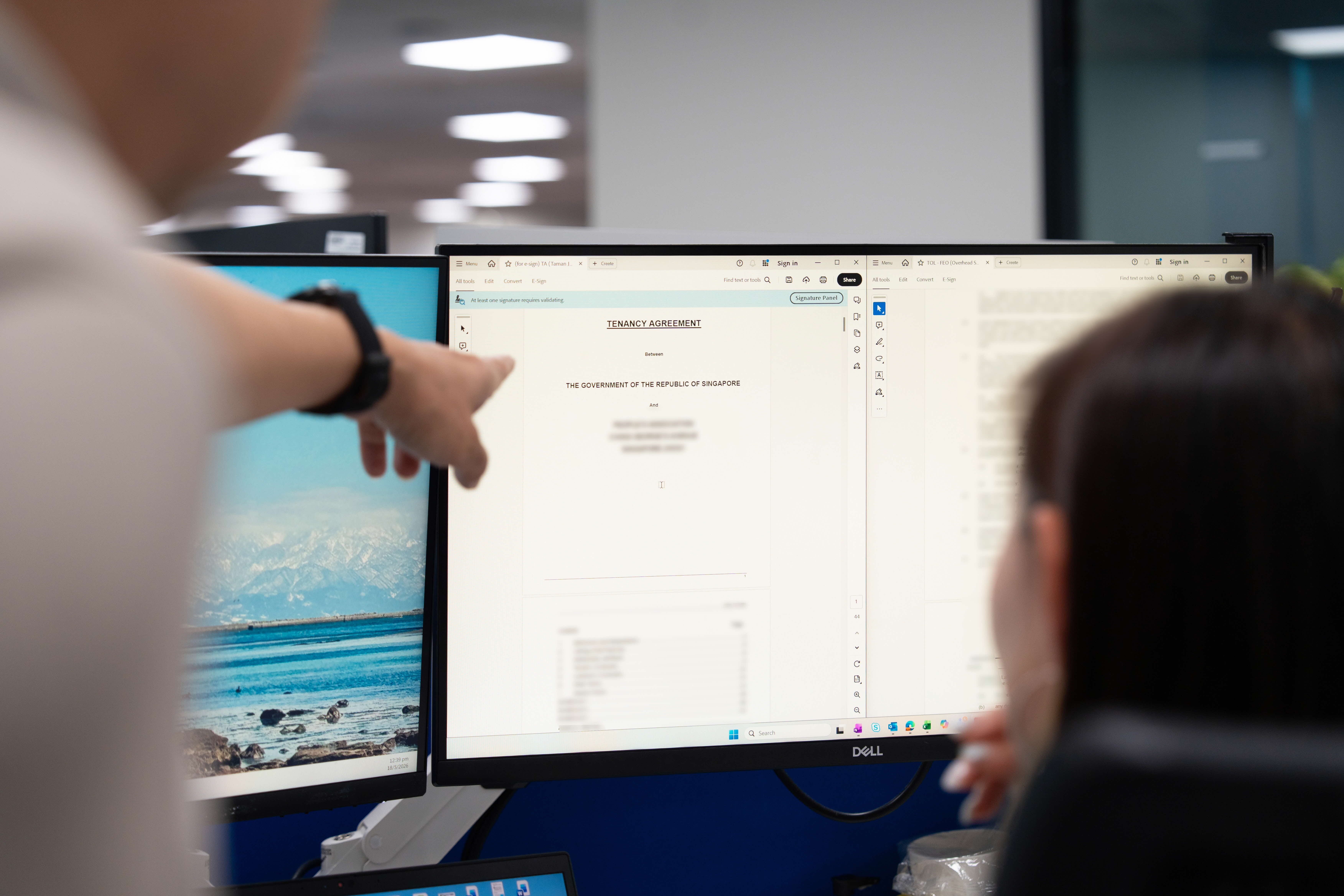
A tenancy agreement involves different considerations from a TOL
A tenancy agreement is different. That typically involves buildings and exclusive use, where the occupier needs operational certainty over a longer period, for a national or community service objective. Hospitals, community facilities and arts housing are examples. So while both involve "renting" State land or property in some form, the purpose and planning considerations are quite different. These agreements are administered in consultation with the relevant lead agencies, who champion the respective cause or public service need. This is also grounded in legislation. Under the State Lands Act 1920 and State Lands Rules, appropriate land instruments are issued for use of State land — such as a tenancy or TOL — with clear terms on the purpose, duration, conditions of use and responsibilities.
So are all TOLs the same?
Teng Hwee: Not quite — and this is where it helps to understand the distinction between two types.
As explained earlier, the Temporary Occupation Licence, or TOL, also sometimes called the Renewable TOL, covers temporary uses that may run for up to three years. These are usually linked to a specific project or purpose, and renewal depends on compliance with the licence terms and whether the land remains available after consulting the relevant agencies.
The Non-Renewable Temporary Occupation Licence, or NRTOL is for shorter-term, one-off or time-bound uses, and is for no more than 90 days — for e.g. pop-up markets, music festivals, festive bazaars, wedding shots, filming, community events, religious functions. Once the approved duration is up, there’s no renewal.
But temporary or short-term does not mean less scrutiny. Whether the use is for a weekend or three years — we still need to assess whether the site is available, suitable and safe, and whether the proposed use requires coordination with other agencies.
Andrew: Both types are administered through our TOL application portal, and both come with clear terms and conditions of use covering things like permitted activities, duration and reinstatement requirements. Once approved, we also monitor the use and enforce compliance where needed. The licence type may differ, but the rigour behind it does not.
3. When people see an empty plot of State land, they often assume it is free to use. Is it ever?
Andrew: State land may look empty, but it is never truly "free". Every parcel is planned, safeguarded and accounted for. Some sites are reserved for future housing or infrastructure. Others are pending redevelopment or subject to technical constraints that are not obvious from the surface — uneven terrain, drainage issues, vegetation risks or restricted zones.
Unauthorised use can create real issues: operational conflicts with planned works, safety hazards and enforcement issues down the line.
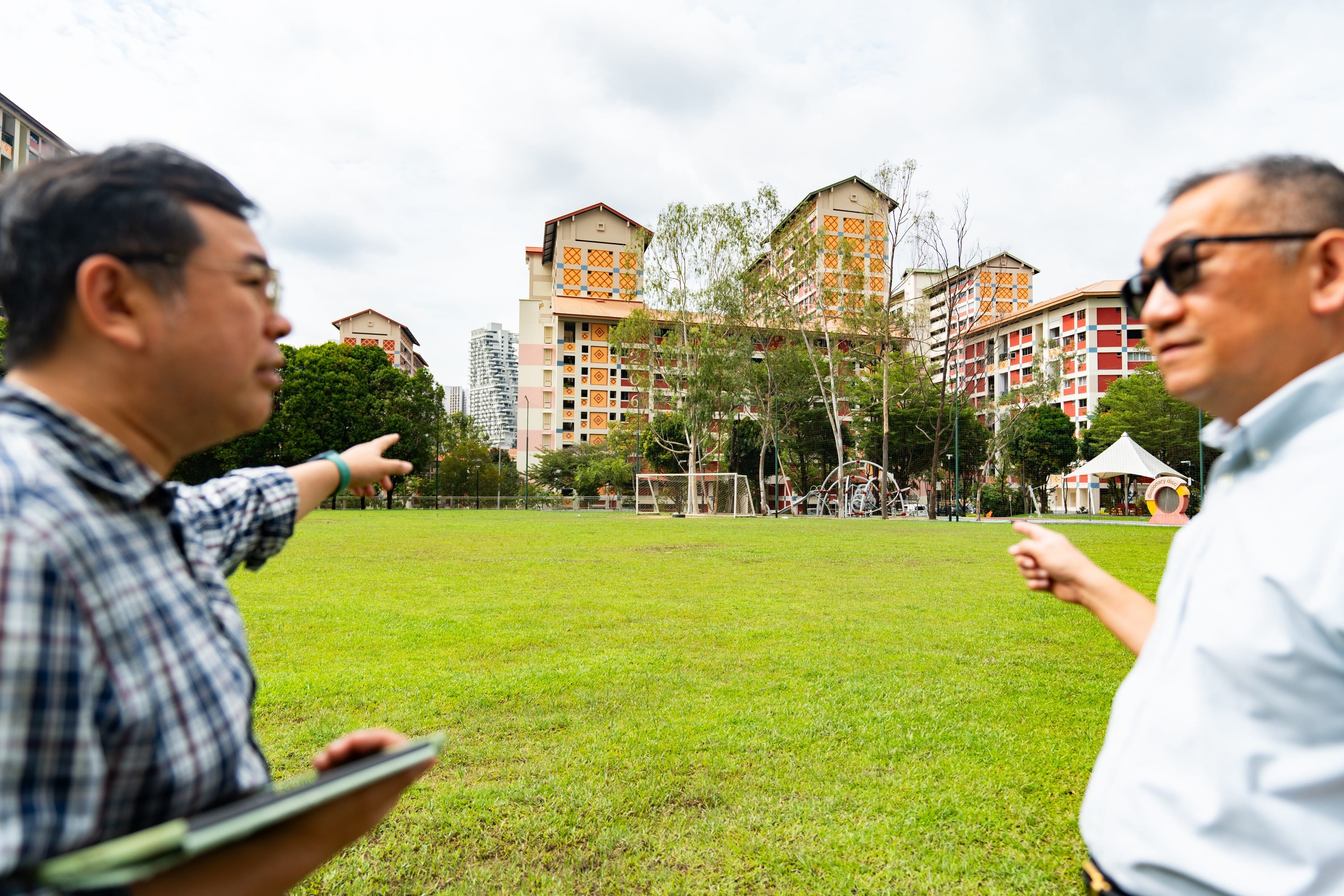
Every parcel of vacant State land is planned, safeguarded and accounted for — a reflection of Singapore's careful stewardship of its limited land resources
4. Many people assume approvals of TOLs or NRTOLs should be quick, as they are “just for temporary use”. Why can applications still take time?
Teng Hwee: This is probably the biggest misconception we encounter. “Temporary” does not mean simple.
TOL is not just an administrative formality. It is a framework that helps us assess whether a use is suitable. A weekend event or a temporary worksite may sound simple, but there still needs to be accountability — what the land is used for, what is the tenure, what are the agencies’ requirements for example where vehicular access can be taken, what kind of allowable works that can be carried out near MRT stations, drainage reserve. Are there drains, trees or underground services that may be affected? Is the site too close to homes? Will the activity create noise, traffic or parking disamenities? Is the land already needed for an upcoming project?
Depending on the location, use and duration, we may need to consult various public agencies in their respective competencies for all these considerations so that we can be assured that the application is operationally feasible and does not disrupt public interests.
Hence time taken is not because the application or paperwork is held back. What looks like a straightforward vacant plot to an applicant may involve several layers of assessment behind-the-scenes.
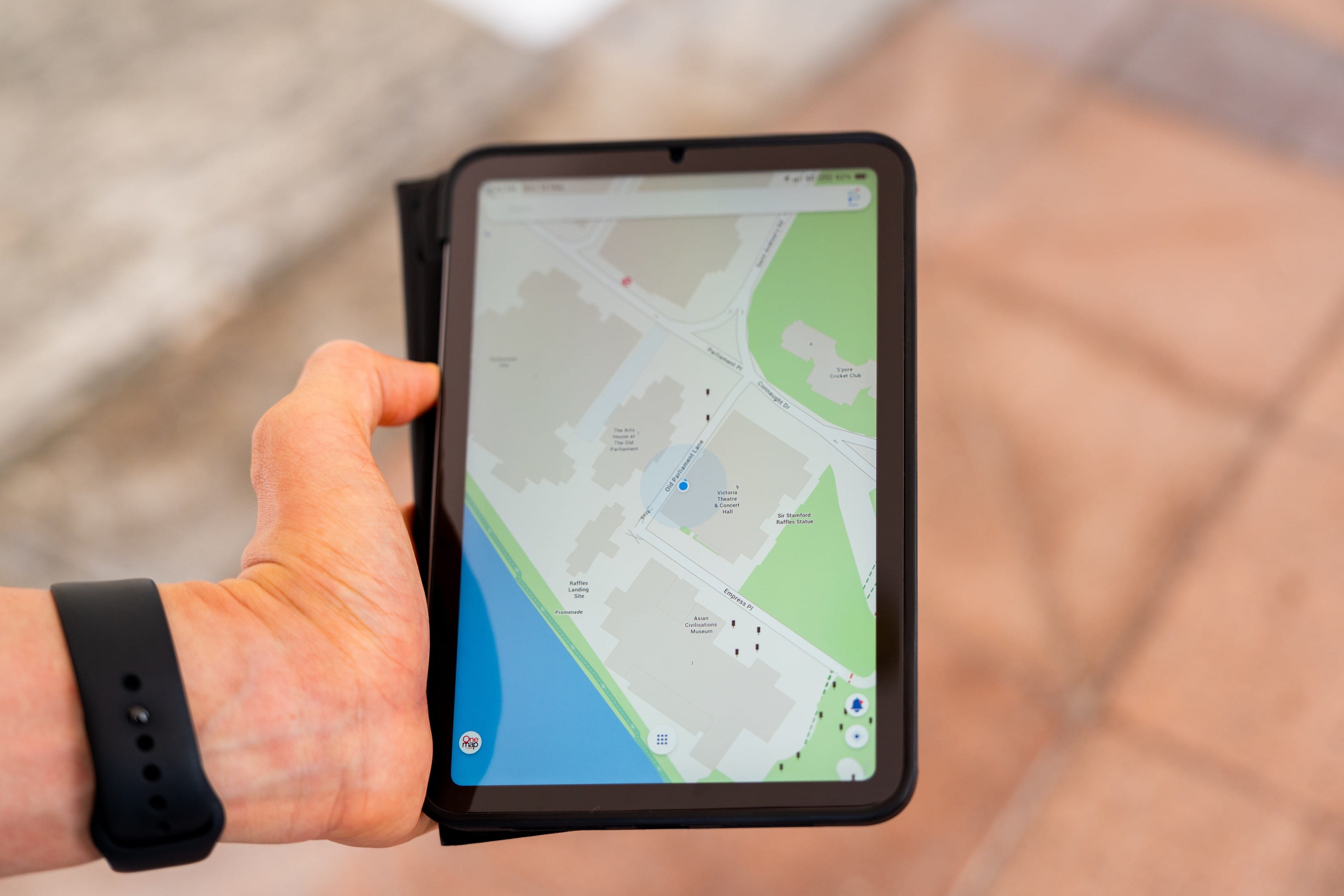
Applicants check OneMap to see if the vacant plot of land belongs to State land before approaching SLA
Teng Hwee: There is timeline for the review of applications and those that come in very late cannot be immediately approved. Changes to technical details in the applications will also mean re-starting the consultation process, for e.g. large events where organisers may still be changing layouts or site boundaries very close to the event date – such details affect the technical evaluation and the valuation of the site and will require a fresh review.
A great deal of work is happening behind-the-scenes to ensure the use is feasible, safe and properly managed or valued.
5. What does a typical workday look like for the TLLM team?
Andrew: A lot more public-facing than people imagine. For land near residential areas, municipal issues can take up a significant part of the day. Noise complaints, illegal parking, illegal encroachment, traffic congestion — all kinds of issues. And because these spaces are near where people live, emotions can sometimes run high.
To make things a little easier, our work is organised by geography, which means officers develop real familiarity with the areas under their care. Over time, they come to know which sites tend to attract feedback, which areas are more sensitive, or even where unauthorised dumping may routinely happen.
That ground knowledge and sensitivity matters. When a new application or complaint comes in, the officer is not looking at it in isolation — they already understand the site history and the practical issues on the ground.

Andrew (right) and his team manage State land near residential estates — one example being Bishan Active Park, currently tenured to Marymount Citizens' Consultative Committee which organises sports and community activities for residents at the park
Teng Hwee: Officers typically start each day looking at urgent emails and feedback — queries from licensees, questions about rental charges, requests for security deposit refunds. After that, they review their case dashboards: renewals, variations, terminations, reinstatement matters, new applications.
Depending on the case, they may need to arrange site visits, coordinate with technical agencies or speak directly with applicants. After a temporary use ends, for example, officers physically inspect the site together with other public agencies to verify that everything has been properly reinstated before we release the security deposit.
It is not just supporting policy work. It is operational, administrative, technical and customer-facing all at once.
6. Community feedback seems to be a major part of the work. Has this become more challenging over time?
Andrew: Definitely. Noise complaints alone take up a significant amount of time. Noise is inherently subjective — what is acceptable to one resident may be unbearable to another. We have had cases where residents repeatedly feedback about noise levels arising from community activities on State land. Our officers started using decibel-measuring apps to assess sound levels objectively rather than relying purely on perception, in order to determine a base level of reasonableness.
In a way, the work progressively evolves together with the feedback we receive.
Teng Hwee: Singapore is also becoming denser, so there are naturally more competing expectations about how spaces should be used. One group may want more community activities. Another may prefer peace and quiet. Yet another wants more parking spaces. Sometimes residents ask why an event cannot be stopped because of their feedback — but if the use is legitimate and properly approved, we will have to balance broader community needs.
Temporary uses like wakes are a good example. They can be sensitive especially when held near residential areas. But in land-scarce Singapore, there needs to be some accommodation for short-term community uses. A large part of our work is simply finding that balance fairly, while taking into account feedback that we receive from the public, and in consultation with other public agencies.
7. How does TLLM balance community requests, such as dog runs or interim parks with other commercial needs?
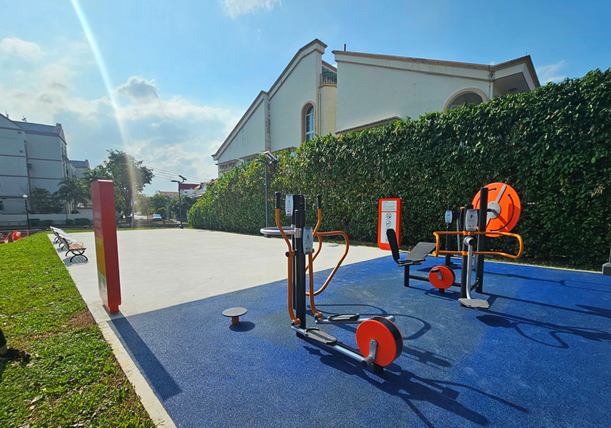
State land put to interim good use — the Dunbar Interim Fitness Corner at Dunbar Walk, opened in February 2026, giving residents a dedicated space for fitness and community activities
Teng Hwee: There is increasing demand for community facilities, and we understand the value they bring — especially where there are pockets of State land not immediately needed for development.
Every request is assessed case by case with the agencies and stakeholders: the tenure of the site, whether there is genuine community demand, whether similar facilities already exist nearby.
Andrew: A good example of a successful outcome is the State land at Yung An Road and Hu Ching Road, which was transformed into Taman Jurong Oasis Interim Park and Taman Damai Interim Park respectively. These sites could have remained passive green spaces while awaiting longer-term plans. Instead, through collaboration between agencies and community partners, they became interim parks with allotment gardens, thematic zones and landscaped spaces where residents can gather and interact.
The names were even chosen through public engagement, which helped build a stronger sense of community ownership.
Done well, interim use is not just about filling empty land — it can genuinely revive a sense of kampong spirit.
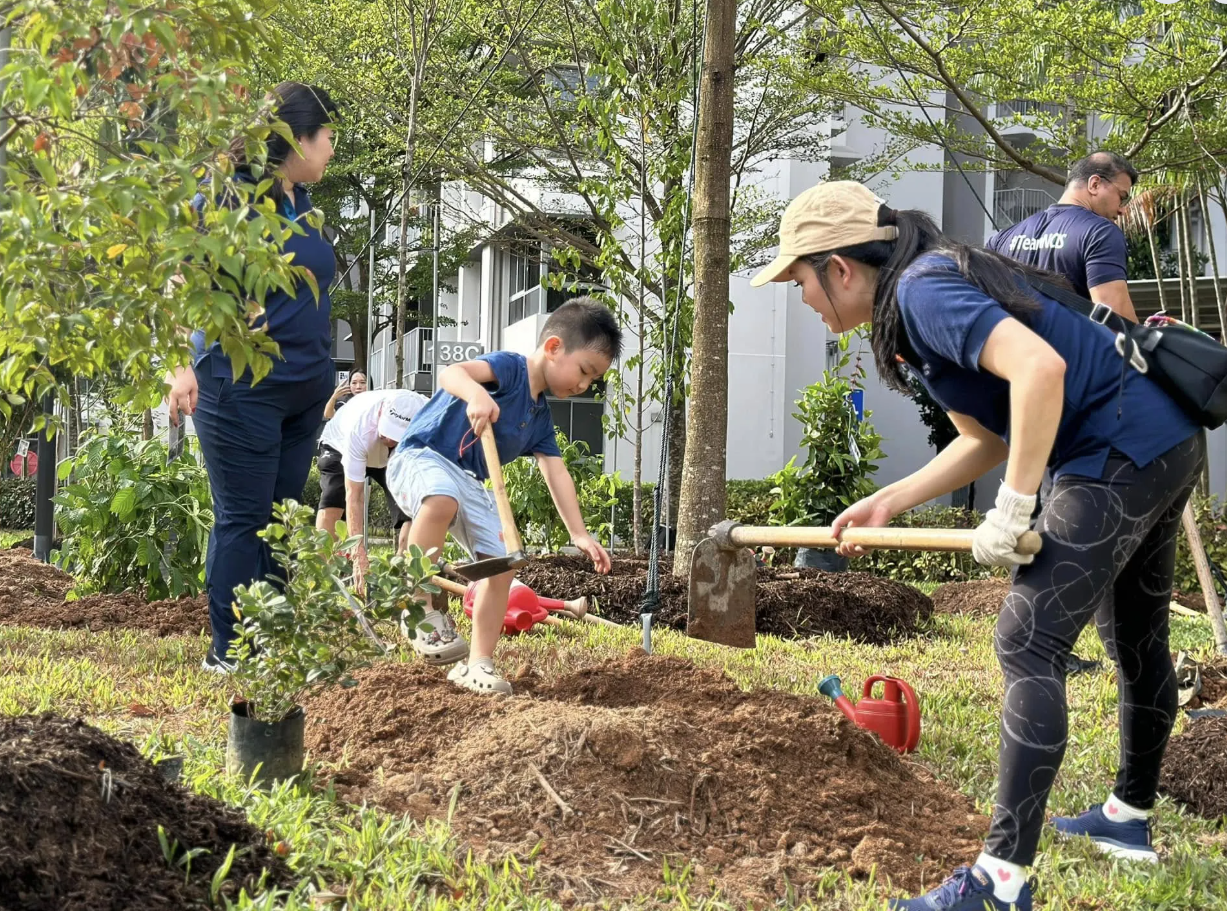
Residents gathered at Taman Damai Interim Park on 3 August 2024 to kick off a tree planting initiative under the OneMillionTrees Movement (Photo: Taman Jurong Community Club)
8. Are there ways SLA is improving or streamlining its land management process?
Andrew: Applications are already digital, and some uses can receive instant TOL approvals subject to backend verification. For officers, we also use digital tools for inspections — instead of manually recording observations and uploading photos later, officers can conduct inspections on-site using tablets and submit reports directly into the system, including photographs.
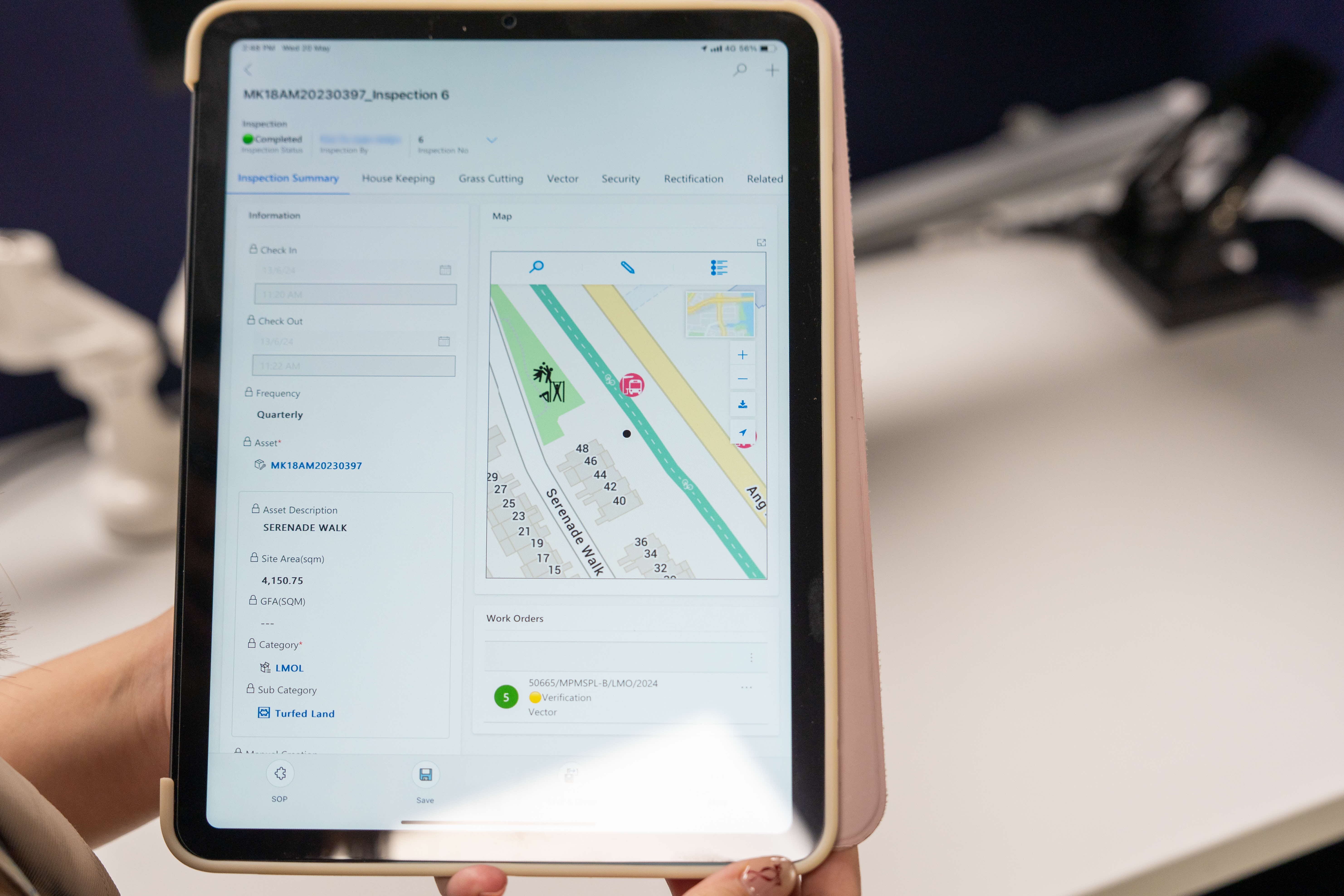
Ascend is an internal tool that provides access to site records, inspection history and land parcel information in real time, anytime, anywhere
We use Ascend, a platform that allows officers to access site records, inspection history and land parcel information while they are out in the field. It also supports mapping and visualisation, so officers have a clearer picture of the parcels under their care. For maintenance issues like grass cutting or pest control, work requests can be submitted in a more structured way too. Technology is helping us close the gap between desk work and groundwork.
Teng Hwee: Show flats are a good example of how we are trying to make the process more straightforward. Developers usually want a site near their project, but more often than not, that is not always easy. A plot may look suitable on the map but later turn out to be unavailable because of future plans, underground services, access issues or other technical constraints.
There is also the ground impact to consider. Launch periods can bring heightened traffic, noise and congestion, especially if they are near homes. So we have recently worked with URA to pre-identify suitable sites.
Instead of having developers search, apply, wait, and then possibly start all over again, this legwork has been completed upfront.
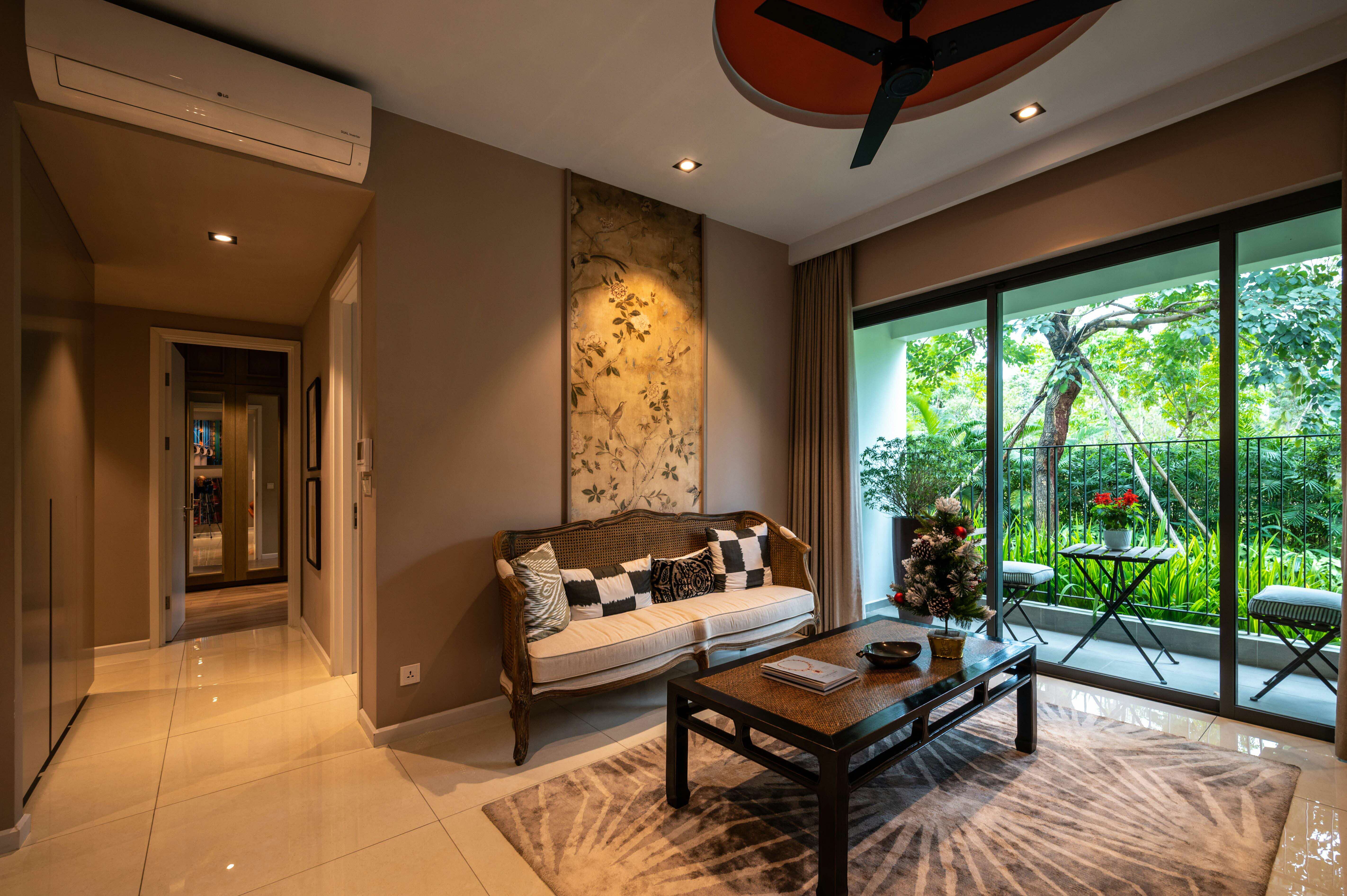
Suitable showflat sites are now pre-cleared and listed on the TOL portal, streamlining the approval process for developers
Today, around 20 suitable pre-approved show-flat sites are listed on the TOL portal, with more to be added. Developers still need to submit their layout plans for approval, but at least with these pre-identified sites, they have a base to start from and a potentially shorter approval time.
In the meantime, we are also encouraging developers to explore more land-efficient approaches like on-site or virtual show flats as such options will also support sustainability as there will be less need to construct solely for a temporary use.
9. What is the most interesting aspect of your work?
Andrew: The dynamic nature of the work — no two cases are ever exactly the same. A lot of the learning happens through experience. Sometimes you encounter situations that require completely new ways of thinking. The evolution from subjective noise complaints to objective decibel measurement is a small but significant example of that.
Teng Hwee: For me, it is the sheer diversity of people and uses. One moment you are dealing with hospitals and healthcare needs. The next, arts housing. Then construction staging areas or temporary uses tied to major infrastructure projects. Arts groups approach spaces from a creative perspective. Hospitals have constantly evolving operational requirements. Contractors are focused on timelines.
Each stakeholder comes with different priorities and constraints. Land processing is not one homogeneous formula. The solutioning for each user differs.
10. Looking ahead, how will your work evolve over the next five to 10 years? Will anything stay the same?
Andrew: I expect the most noticeable shift to be in how we use digital tools and data to support land management decisions. SLA constantly looks to develop our digital platforms and the teams are now working together to integrate information across different platforms and systems, that can help smoother land data management
Manual processes will become more streamlined and system-supported, and we should have much better visibility across the full lifecycle of TOL applications, from submission right through to reinstatement which can enhance the way we serve the public and agencies.
Each stakeholder comes with different priorities and constraints. Land processing is not one homogeneous formula. The solutioning for each user differs.— Ng Teng Hwee, Director of Tenancy, Licence & Land Management (TLLM) Division
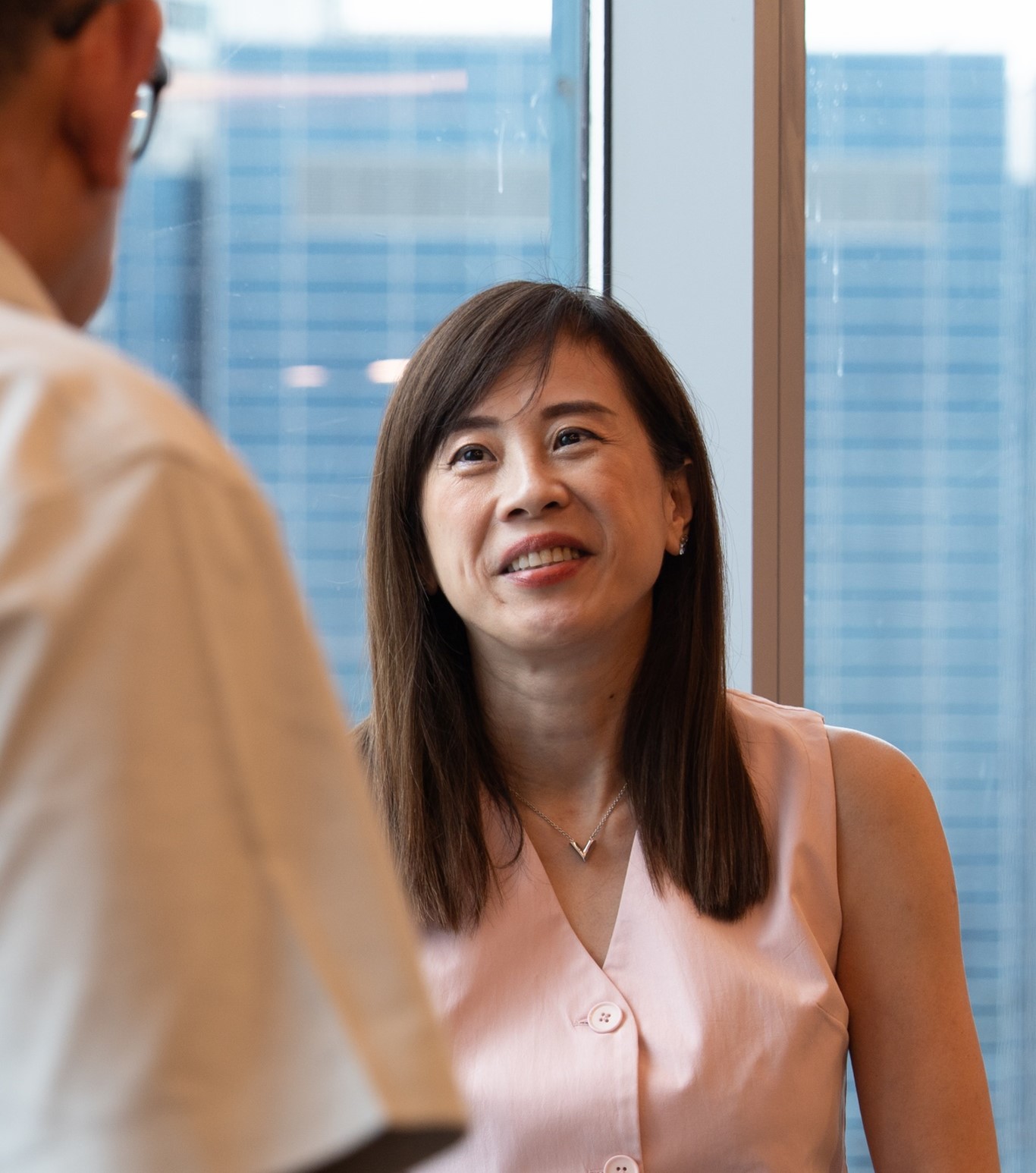

Technology may be increasingly important but the human element in land processing is still important to make judgement calls
Teng Hwee: I think AI and automation will increasingly support both customer service and internal operations. Applicants may eventually be able to instantly check who owns a parcel, whether a site is suitable for a particular use, or what clearances are required before they even apply. Internally, AI may help officers process information faster, flag issues earlier and support decision-making.
But despite all this, the human element will remain essential. Land use decisions involve context, trade-offs and judgement. Community feedback requires empathy that cannot be fully automated. Technology can make processes faster and more efficient — but people will still be needed to understand the bigger picture behind every decision.
11. What would TLLM most like the public to understand when it comes to temporary uses of State land?
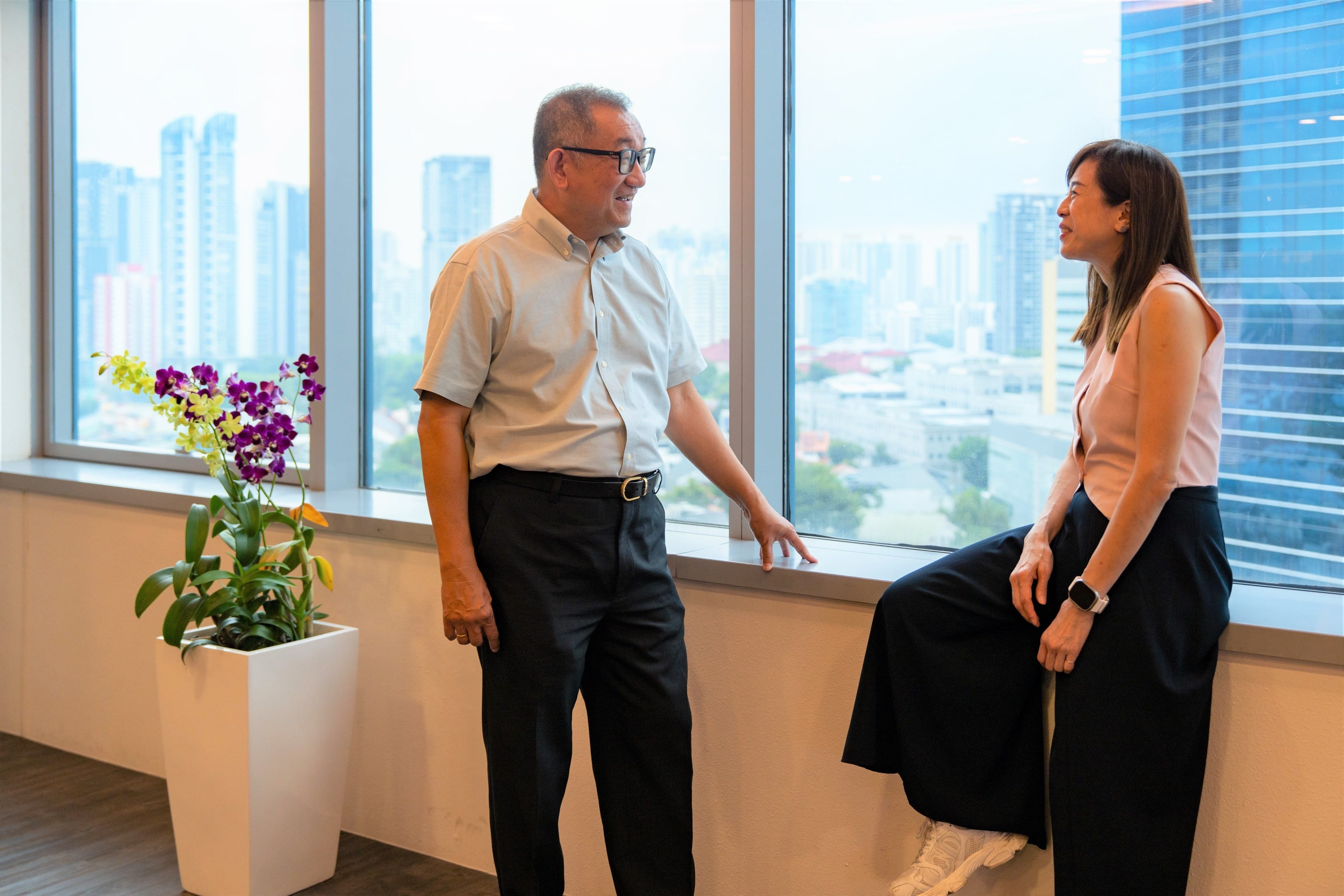
Teng Hwee: In land-scarce Singapore, many spaces have to serve different needs at different points in time. A piece of State land might support a community event one weekend, filming the next, and then a temporary use tied to construction works.
Some of these uses may cause short-term inconvenience — but they also serve real needs. We hope Singaporeans will continue to appreciate the needs of fellow Singaporeans with patience and understandng, especially for transient uses that last only a few days.
Andrew: And that consideration works both ways. Applicants and users of State land also need to be responsible — keeping sites clean, observing approved uses and reinstating land properly after use.
Ultimately, State land is shared space. The challenge is not just approving or rejecting applications but helping different users coexist in a dense city. That is what the work is really about.
Want to book State land for short-term recreational use or a wake? Here’s what you need to know:
For members of the public who wish to use State land — whether for a community event, religious function, mini fair, filming, carnival, worksite or funeral wake — the first step is to check whether the site is State land. They can use OneMap’s LandQuery feature at www.onemap.gov.sg (opens in new tab) to check land ownership.
Applications should then be submitted through SLA’s TOL portal (opens in new tab). The appropriate land instrument, such as a TOL or Non-Renewable TOL, will depend on the nature and duration of the activity.
#SLAExplains is a thought leadership series where SLA senior management breaks down complex land and geospatial concepts into accessible insights for the public. The series reflects SLA's commitment to transparency and public education, helping Singaporeans better understand the systems and policies that shape our nation's development.